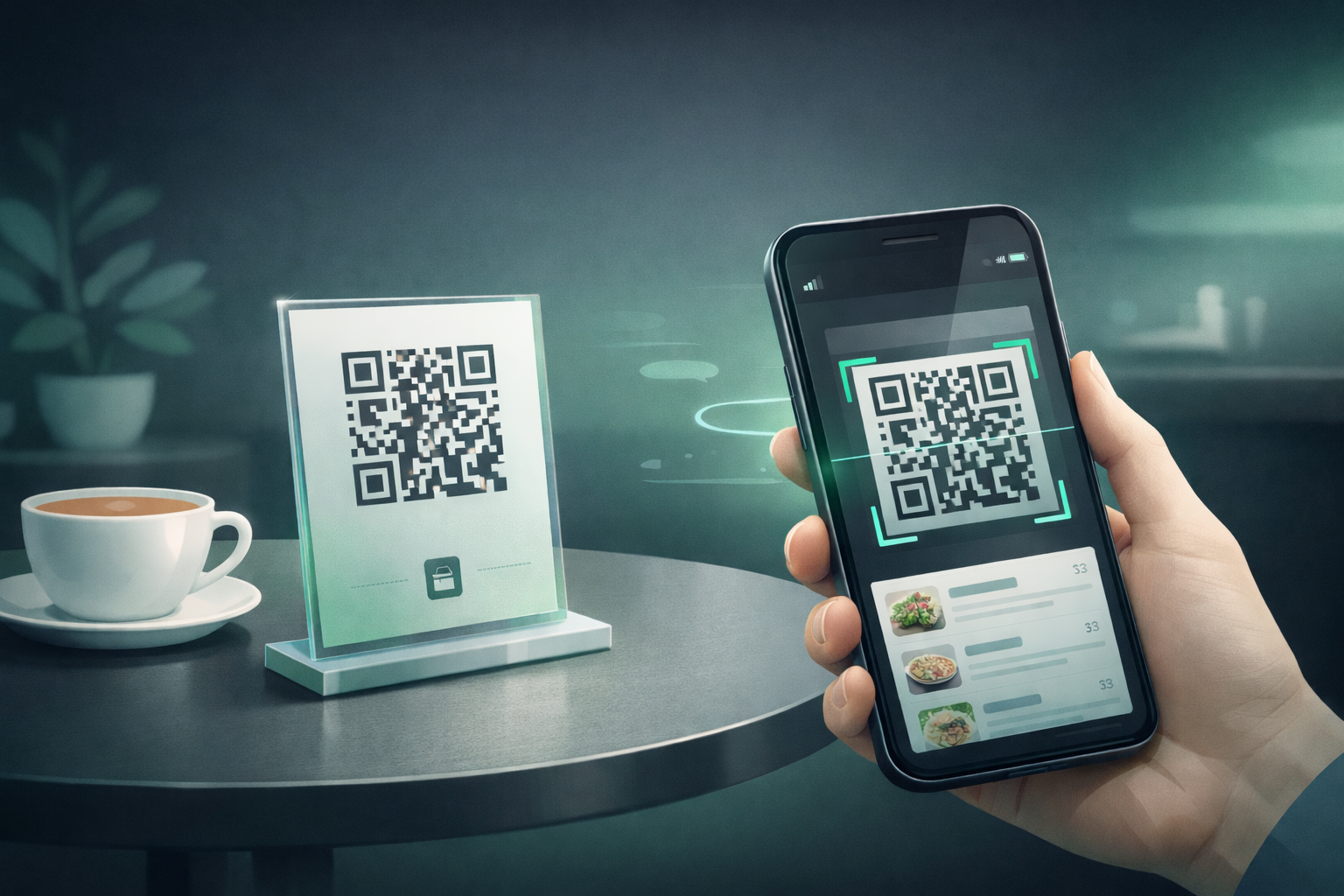
You have definitely seen QR codes everywhere: on tables, receipts, posters, shop windows, and even in ads. But what exactly are they?
What is a QR code?
A QR Code, short for “Quick Response Code,” is a type of barcode that can store information. When you scan it with your phone, it takes you directly to something specific.
For example, it can send you to a website, a digital menu, a PDF, a phone number or email, or even WiFi details.
In simple terms, it is a fast way to move a user from the physical world to the digital one.
How does it work?
The process is very simple. The user opens their phone camera, scans the QR code, taps the link that appears, and is taken directly to the content.
No typing. No searching. No unnecessary steps.
👉 Instant access.
Why is it used so much?
The main reason is convenience. A QR code reduces the number of steps for the user, speeds up the experience, does not require an app, and works on most modern smartphones.
It is simple, fast, and effective. That is why it has become so common in so many different use cases.
QR codes in business
Today, QR codes are used almost everywhere. In business though, and especially in hospitality, they have become an everyday operating tool.
They can be used for digital menus in cafés and restaurants, for payments, for offers and campaigns, for review collection, and for connecting users to social media or other online actions.
Static vs Dynamic QR code
This is an important distinction — but it is often misunderstood.
Static QR
- contains a fixed link (URL)
- the QR code itself never changes
- it always leads to the same link
- the content can change if it is hosted in a system (e.g. a digital menu)
Dynamic QR
- does not lead directly to the final destination
- goes through a system first (redirect / tracking)
- allows you to change the final destination at any time
What does this mean in practice?
If we are talking about a QR digital menu, the real value is not whether a QR is “static” or “dynamic”, but how easily you can update the content and how well the customer experience is designed.
In practice, this ties directly to the solution you choose: from free versus subscription QR menus to whether customers land on a PDF or a proper menu system.
So why does it matter to you?
A QR code is not just a little square. It is a customer touchpoint, a speed tool, and a way to improve the experience you offer.
Depending on how you use it, it can be either simply functional or a real sales tool.
The next decision — cost, flexibility, and guest experience — is how you combine the tool and the menu format. That is where a QR stops being merely convenient and becomes a real advantage.
See what your own digital menu could look like
Try MintQR or talk to us to build something fully tailored to your brand.
Get started